
Éamonn Zeel Freel : Sculpting the Future of the Image
- Oct 25, 2025
- 3 min read
In the shifting space where art, fashion, and digital technology collide, Éamonn Freel has carved out a position as one of the most forward-thinking image-makers of his generation. His work doesn’t just illustrate contemporary culture—it builds the architecture of it. Merging fine art, photography, CGI, and motion design, Freel’s practice redefines what it means to make an image in the age of simulation.

Originally from Ireland and now based between London and Paris, Freel began his creative journey with a background in fine art. Trained in traditional media—painting, drawing, composition—he developed a deep respect for form, texture, and light. But rather than remain in the static world of canvas and brush, he turned toward the digital frontier. Freel taught himself 3D modeling, motion capture, and post-production techniques, fusing classical sensibility with contemporary experimentation. The result is a visual language that’s both tactile and technological: human skin meets digital chrome, couture meets code.

Freel’s career first gained traction through photography, but it quickly became clear that he wasn’t content with simply documenting beauty. He wanted to dissect it, reconstruct it, and question it. His early editorial work revealed a fascination with the tension between the organic and the artificial. Faces became landscapes, bodies became architecture, and fashion became the connective tissue between physical and virtual identity. Every frame he builds feels like a paradox—part dream, part data, an image that breathes yet resists being pinned down.


In fashion, Freel’s collaborations have stretched from avant-garde designers to global brands, but his touch remains unmistakable. He has an ability to translate clothing into world-building: garments become portals, models become characters, and campaigns unfold like cinematic universes. In a visual culture where imagery often feels disposable, Freel’s work resists quick consumption. It invites you to linger—to decode the textures, to wonder what’s real and what’s rendered.


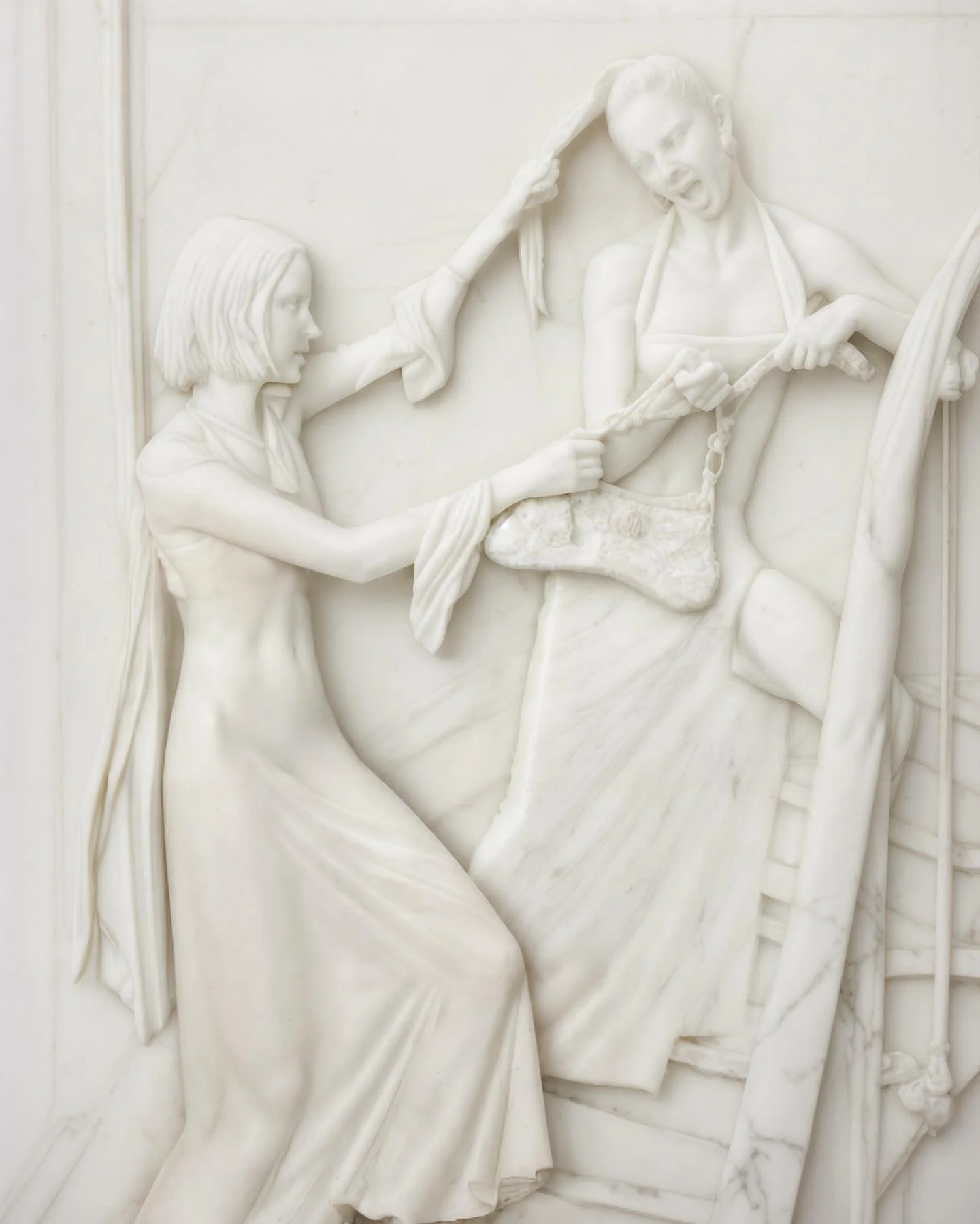
But beyond the technical virtuosity lies something deeper: emotion. Freel’s images hum with quiet psychological tension. They evoke loneliness, transcendence, transformation. He explores how technology can distort or enhance the self, how digital skins might protect or expose us, how beauty can exist simultaneously in the human and the synthetic. His art isn’t about rejecting the machine—it’s about learning to coexist with it.


As an artist, Freel embodies the hybrid condition of our time. He’s not confined by medium or market; his work flows between editorial pages, museum walls, and LED screens. He represents a generation of creators for whom digital tools are not a novelty but a native language. Yet unlike many who rely on technology for spectacle, Freel uses it to craft intimacy. His images may look futuristic, but their impact is profoundly human.

In recent years, Freel’s practice has expanded beyond static visuals into immersive experiences and moving image projects. His experiments with virtual spaces and augmented environments hint at where his trajectory is heading: toward full sensory storytelling, where the audience doesn’t just view an image but inhabits it. He’s building worlds where the line between reality and imagination dissolves—an aesthetic future that feels both thrilling and inevitable.

What makes Éamonn Freel one of the defining artists of this moment is his refusal to choose between beauty and intellect, between emotion and technology. His work holds all of it at once. In his universe, light can be data, skin can be code, and the soul can exist somewhere between the pixels.


For Context Magazine, Freel represents what contemporary image-making aspires to be: cross-disciplinary, emotionally intelligent, and unafraid of the future. His art doesn’t just reflect the digital age—it gives it depth, vulnerability, and grace.


Comments