
Liam Aldous: The Mad City Oracle
- Oct 31, 2025
- 4 min read
There are cultural commentators, and then there’s Liam Aldous—a figure who doesn’t just write about the creative underground but quietly influences hearts and minds behind the veil. Best known for his multi-dimensional platform ColourFeel, glimpsed only occasionally via his IG portal @madcity_dispatch, Aldous has become one of the most distinctive voices shaping how people understand art, nightlife, and hyperreality our the modern era. His world of narratives, which come alive through both writing and staging IRL events “not made for social media”, are a weaving together of music culture, architecture, politics, and philosophy – creating a wavelength where a DJ set is as culturally significant as an art installation.

Aldous began his career as a journalist and cultural researcher, covering art, travel and design for global publications (Monocle, NY Times, Vogue) while based in Madrid. Over the years, he developed a signature approach to storytelling—immersive, poetic, and deeply attuned to the rhythms of place. Rather than writing about culture from a distance, he writes within it, tracing how creative communities evolve, adapt, and rebel against the mainstream. Disillusioned and “somewhat bored by the captive mastheads of corporate media” he’s joined many other writers by migrating to Substack, where he publishes stories and other meta-modern reflections as part of The ColourFeel Dispatch. A quick glance reveals a very current-coded splash of psycho-spiritual insights about life in Ibiza (where he moved in 2019) to a techno-dystopian themed dictionary series that unpacks the wider ramifications and symbolism of new words colouring the modern lexicon. There’s also the short four-chapter story ‘Once Upon a Time in La Medina’, a saga rooted in Ibiza during the height of the pandemic, one which Aldous frames as fiction but is so suspiciously specific that it might be unbelievably true. His writing doesn’t just describe—it maps, translating the abstract energy of a scene into lyrical language that resonates.


With ColourFeel, Aldous is creating both an interactive lens to untangle the workings of our weird, wild world, then publishes his findings in the form of zines, virtual posts, and guides that profile places and people. Going beyond the ‘what’, he is always trying to get to the heart of the ‘why?’ and leave a more tangible legacy of documentation that has longevity.


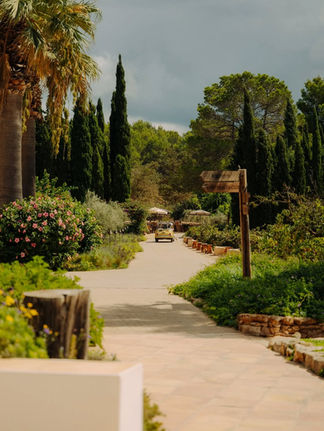
A living archive, his dispatches read like they are being posted from the frontlines of creative resistance. Perhaps the best vector for his venture into the underground of cultural, intellectual, and esoteric urgency is his micro-festival Another Future, which will celebrate its fifth edition in the summer of 2026 – all set against the backdrop of a total solar eclipse in Ibiza. Another Future isn’t a festival of spectacle though, its part summit, part choose-your-own adventure ride, and a thoughful inspiration trip for a cross-generational mix of artists, designers, club kids, curators, thinkers, and anyone else reshaping the future of culture from the inside out. The project captures fleeting cultural moments—the kind that rarely make it into institutional archives—and reframes them as critical acts of creativity. From Marrakech to Tbilisi and Ibiza, Aldous touts the smaller crowd sizes of 100 people as a dynamic way to gain access more interesting places and genuinely mix with local communities. Another Future is described as cerebral, celebratory, and a little bit spiritual – with participants leaving with a survival guide of sorts – practical knowledge and tools to navigate this delirious decade.



But Aldous isn’t just an observer—he’s a catalyst. His curatorial projects and events – for brands such as LOEWE, Nike, Jordan and ByRedo – often blur the lines between journalism, performance, and collective experience. Whether he’s producing multi-disciplinary panel discussions, hosting future visualisation workshops, or persuading introverted artists to open their secluded studio doors, his craft is about inspiring top tier creatives, design teams, and leaders in the music industry, transforming cultural theory into something you can feel. Less made-for-social-media photo-ops and more about lasting connection that creates “ripples in the pond.”


With so much of culture reduced to an act of consumption, Aldous works tirelessly to turn back the tables – getting people to talk more, listen beyond their feedback loop and always expand perspectives. "Politics is too performative – a rage-baiting circus – so ColourFeel’s praxis is about reminding people of their power, their resilience, and capacity to imagine something else," he says, adding that his main interest lies in systems and patterns: how the mood of a city manifests into a nightlife ecosystem of resistance; how digital space delivers empty promises and undermines our sense of belonging; why the Athenian concept of philotimo can make a kinder world go round. There’s always an undercurrent of curiosity in his work, a desire to decode what the present moment is trying to tell us about the future.




In an era when media is saturated with surface-level content, Aldous insists (rather stubbornly) on depth, resonating with fellow creatives who have an actual interest in seeding a better world. His immersive events unfold like complex stories – and vice versa – told with instructive flair, occasionally scratching revelatory, universal truths. He writes with the precision of someone who’s spent years learning its rhythms.
What makes Aldous truly singular, though, is his capacity to build community. He’s not a commentator perched above culture—he’s embedded within it, connecting people, nurturing dialogues, and amplifying voices that might otherwise go unheard. His presence at the intersection of media and movement means he’s constantly rewriting the script of what cultural journalism can be: part essay, part archive, part ritual.
Citing the maxim “play is the highest form of research,” Liam Aldous remains one of the few cultural narrators willing to slow down, listen, and transform ideas into liveable experiences that allow people to embody learnings and – hopefully – grow. A reminder that writing can still be radical, that events can still be sacred, and that art, at its best, is not a product but a conversation.


Comments