
Egor Buimister: Painting Between Worlds
- Oct 6, 2025
- 2 min read
Egor Buimister’s work feels like shimmering fragments from a dream you can’t quite place—a holy whisper at the edge of memory. Born in Riga in 1997 and now based in London, Buimister applies watercolour and drawing techniques to conjure scenes that unravel slowly: ghostly silhouettes, hushed rituals, shadowy figures emerging from amorphous space. These aren’t literal landscapes—they’re emotional terrains, untethered yet tethered, suspended in a flickering moment between real and unreal.

Studied at Camberwell, Goldsmiths, and King’s College London, Egor’s career mixes solo exhibitions like “An Encounter” (Riga, 2022) and “Some Ghost Stories” (Riga, 2020) with group shows across Europe. His work lives in private collections and the Noewe Foundation in Lithuania, quietly rippling beyond institutional walls.

On the canvas, forms float in open space—figures truncated and reassembled, fragments of the human against barewashes of watercolour. The style feels like peeling back a Polaroid or reading a fading Polaroid from another century. Title references such as “Ode to the Confederate Dead” evoke subdued historical tension, rendered via bulb-wet pigment and tender line.
What sets Buimister apart is how personal and universal his work feels simultaneously. He’s telling stories of memory, loss, belonging—and he does it through atmosphere, not literalism. Light and shadow don’t reveal; they suggest. They invite your projection.
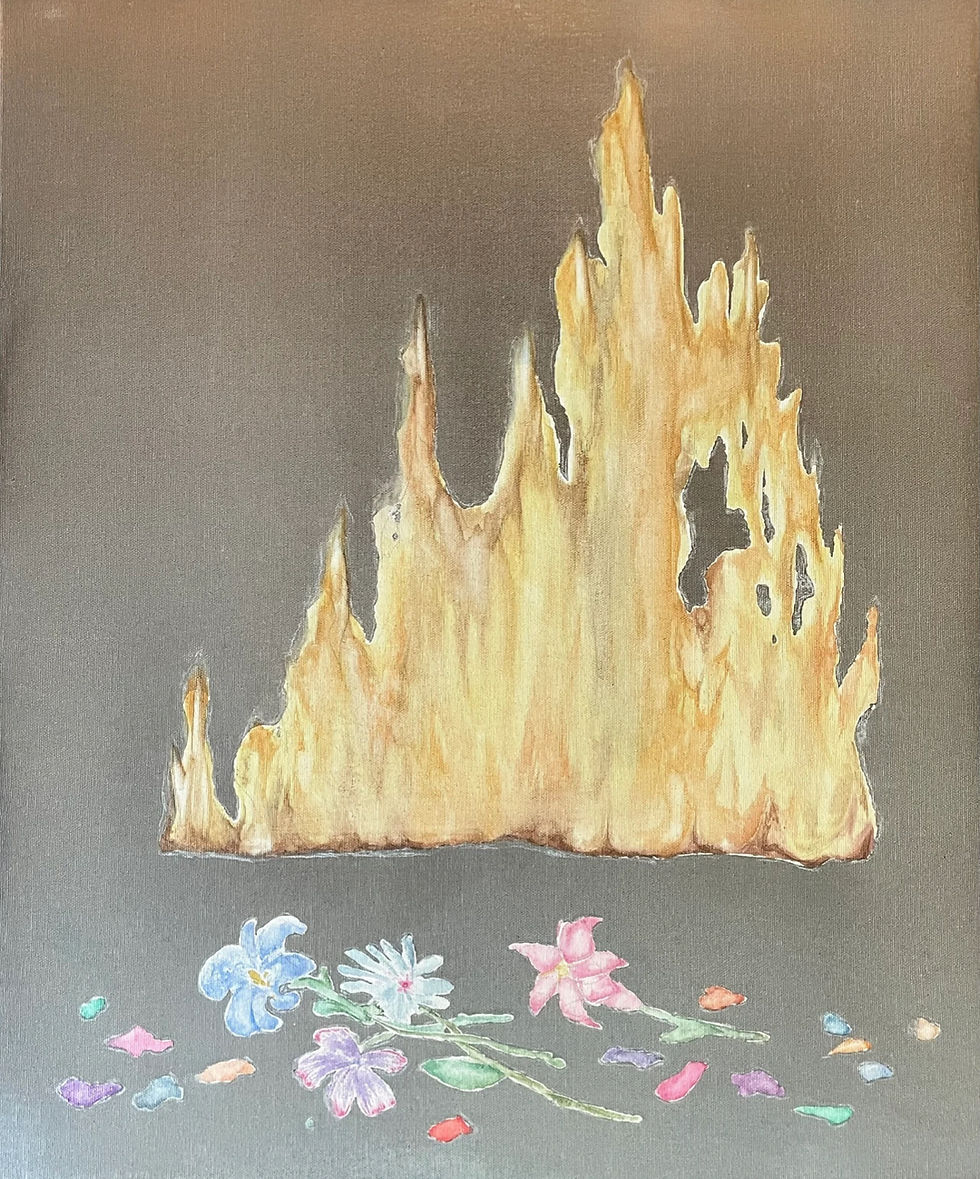
Egor once explained his art stems from “emerging from the unknown into our perception.” In each piece, you sense an encounter—an echo of the uncanny settling just outside full awareness.





Though quiet in tenor, Buimister’s paintings hum with psychological resonance. They feel like waking up in a hallway you’ve never walked, or imagining a familiar voice in another room. His style feels atmospheric and post-digitised—somewhere between analogue ghosts and modern psychogeography. Buimister too place in 2025 CUT ART award show—“The Garden of Fractured Paths”—in addition to additional group shows in Riga and London.
In a saturated image culture, Egor Buimister is a painter whose art breathes. It’s not posturing—it’s presence. He doesn’t supply instant narratives; he generates space for the viewer’s mind to wander, wonder, and return again.


Comments