
DANYLO MOVCHAN: Memory, Distorted
- May 6
- 2 min read
Some artists document reality. Danylo Movchan lets it fracture. His work doesn’t present a clear image — it disrupts it. Figures blur, environments dissolve, and moments feel like they’ve been pulled apart and reassembled just slightly off. Nothing is fully stable. Everything feels like it’s slipping between states — presence and absence, clarity and distortion. And that instability is the point.


Movchan’s visual language leans into fragmentation. Whether working through painting, image, or mixed media, there’s always a sense that what you’re looking at isn’t fixed. Forms stretch, smear, fade into their surroundings. It feels like memory under pressure — not what happened, but how it’s remembered after time has already started to alter it. That’s where the emotional weight sits.


Because the work doesn’t tell you what to see. It lets you feel it instead. There’s a quiet tension running through everything. His compositions are often minimal, but never empty. Space plays a role. What’s left out matters just as much as what’s included. A figure might be partially obscured, a surface interrupted, a detail lost just before it fully forms.
It keeps you searching. But never fully resolving. Colour and tone are used sparingly, often muted, sometimes almost drained. When contrast appears, it feels intentional — a sharp interruption in an otherwise soft, diffused space. It pulls you in, then lets you drift again. There’s a rhythm to it. Slow. Controlled. Slightly disorienting.


His process feels equally important to the outcome. You can sense the layering, the removal, the moments where something has been altered rather than added. It doesn’t feel like a single gesture. It feels like something worked through — adjusted, reconsidered, and left just before it becomes too clear. That restraint carries through the entire body of work. In a visual culture that often pushes for clarity and instant recognition, Movchan moves in the opposite direction. He reduces. Obscures. Complicates the image just enough to stop it from being easily consumed.



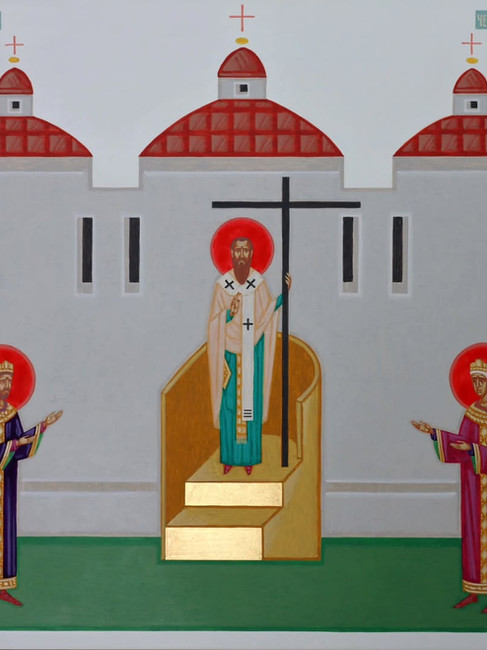
Because this isn’t about quick understanding. It’s about staying with something that doesn’t fully settle. And that’s what makes it compelling. You’re not just looking at an image. You’re looking at something in the process of disappearing — or maybe reappearing — and you’re caught somewhere in between.


Comments