
Arvida Byström: The Girl Gaze Oracle Goes Post-Human
- Jun 26, 2025
- 2 min read
In a world of AI beauty filters, hyper-femme avatars, and corporate feminism, Arvida Byström remains refreshingly… unruly. The Swedish artist and photographer has been bending beauty standards and pixelated expectations for over a decade. From her pastel-drenched self-portraits to her more recent forays into post-human digital art, Arvida has always been one step ahead of the curve—and two steps to the left of convention.

If you were on Tumblr during its golden age, you probably encountered Arvida’s work before you even knew her name. Softly lit, provocatively posed, and unapologetically intimate, her early self-portraits pioneered what we now call the "girl gaze"—a radical shift from how women are usually photographed to how they photograph themselves. Leg hair, period stains, vulnerability, and power—Byström captured it all in cotton candy hues that dared you to look closer.





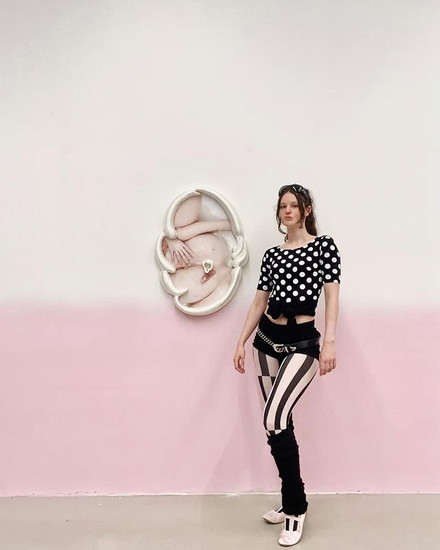
But nostalgia isn’t her vibe. While many early internet artists clung to their Y2K aesthetics, Arvida evolved. Now, she’s collaborating with AI to create eerily beautiful, distorted depictions of the female form—work that questions what femininity even means in a post-human world. Her recent exhibitions, including a major showcase with Human Orientation and features in Forbes and Office Magazine, explore themes of consent, reproduction, digital embodiment, and the fetishisation of girlhood in our algorithmic age.
There’s something deeply uncanny about her new images—portraits that blur the line between avatar and human, where a leg might bend impossibly or a face is almost, but not quite, real. And that’s exactly the point. Byström’s art asks: what do we lose when machines start to define what’s beautiful? And what strange new power might we gain? Far from being a technophobe, Arvida is in constant conversation with the tools of her time. She doesn’t reject AI—she plays with it, subverts it, teaches it to see beyond the male gaze. Her synthetic images still feel wet, raw, embodied. She injects the flesh back into the digital.

Off-screen, she’s also a fierce voice in the conversation around reproductive rights, digital consent, and the commodification of femininity. Her work often sits in that delicious tension between commercial polish and radical vulnerability. You might find her face in an Apple campaign one week, and her uterus in a glitchy AI portrait the next.
At the heart of it all is a single, powerful question: Who gets to look, and who gets to be looked at? For Arvida, the answer is never static. It’s sticky, shifting, soft, and strange—just like her art.




Whether you’re an internet native or just arriving to the weird, wonderful world of Arvida Byström, one thing’s certain: she isn’t here to make you comfortable. She’s here to stretch the image, bend the algorithm, and make the digital space feel human—again.


Comments